
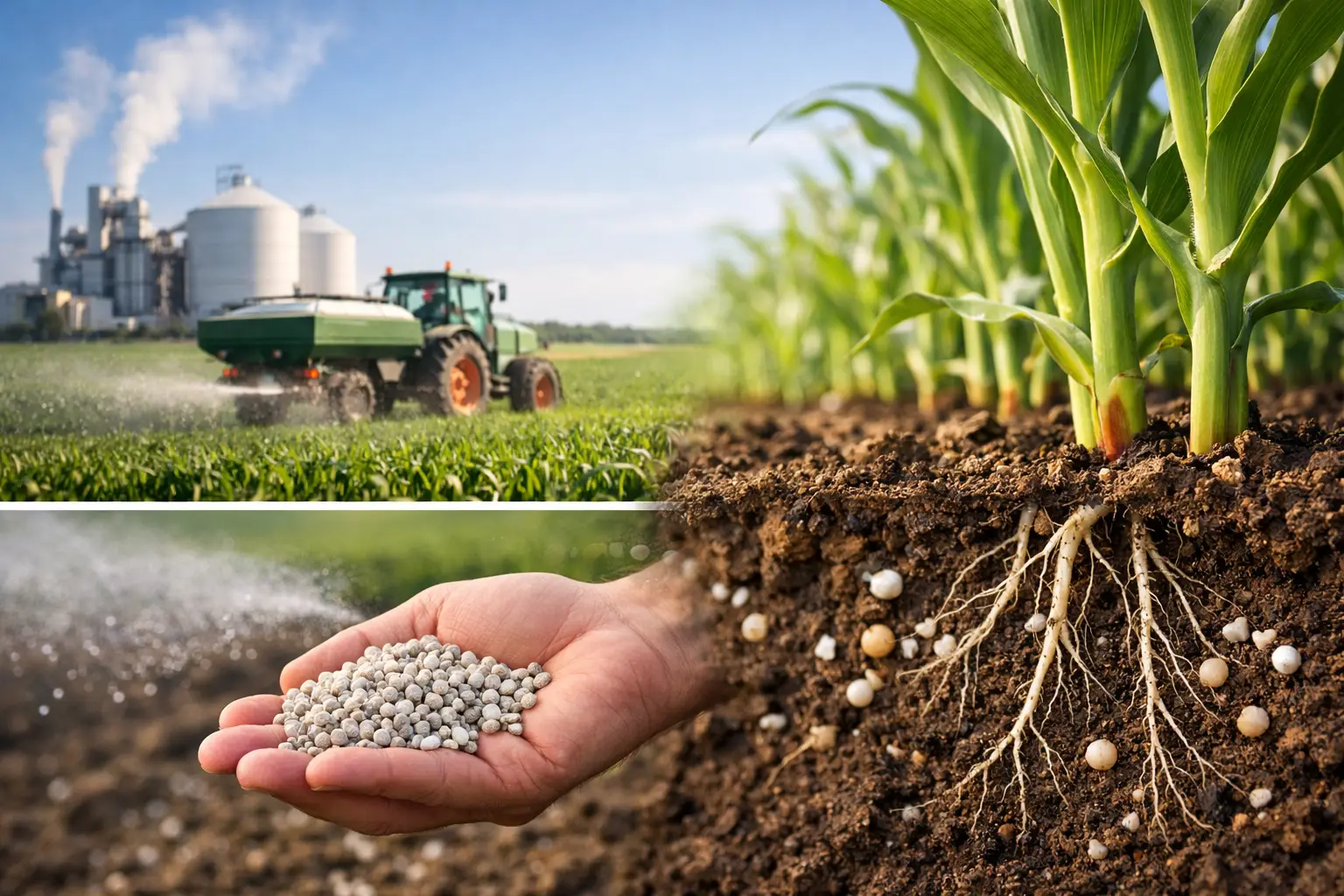
Choosing the best fertilizer for crops is rarely about finding one product that works everywhere. In commercial agriculture, the right choice depends on three things that directly affect margin – soil condition, crop demand, and how efficiently nutrients can be delivered and absorbed. A fertilizer that performs well in one field, climate, or crop programme can underperform badly in another.
That is why serious growers and agricultural buyers should treat fertilizer selection as a crop nutrition strategy, not a catalogue exercise. The strongest results come from matching nutrient form, release pattern, and application method to real field conditions.
What determines the best fertilizer for crops?
The best fertilizer for crops is the one that delivers the right nutrients, in the right form, at the right time, with minimal loss and measurable return. That sounds straightforward, but there are several variables behind it.
First is the soil itself. Fields with low organic matter, weak structure, salinity pressure, poor pH balance, or micronutrient lock-up will not respond the same way as fertile, well-managed soils. In degraded soils, nutrient efficiency often matters more than headline nutrient content. A high-analysis product can still give disappointing results if roots cannot access what has been applied.
Second is crop type and production target. Cereals, oilseeds, vegetables, fruit crops, and industrial crops all remove nutrients differently and respond differently to nitrogen, phosphorus, potassium, sulphur, calcium, magnesium, and trace elements. Yield is one target, but quality matters as well. Protein, oil content, fruit sizing, sugar accumulation, shelf life, and uniform maturity can all shift the fertilizer decision.
Third is timing. Basal fertilisation, top dressing, fertigation, and foliar correction each solve different problems. The most effective crop nutrition programmes usually combine more than one format rather than relying on a single application window.
There is no single best product for every field
This is where many fertilizer decisions go wrong. Buyers often ask for the best NPK grade or the strongest analysis, assuming higher concentration automatically means better value. In practice, value comes from nutrient use efficiency and crop response.
For example, a balanced water-soluble NPK may outperform a conventional granular programme where irrigation systems allow precise feeding. In another situation, an organomineral fertilizer may deliver stronger season-long performance because it improves both nutrient supply and soil condition. In heavily depleted soils, organic inputs can be critical for restoring structure, microbial activity, and moisture retention. If soil fertility is part of the problem, it is worth understanding how organic fertilizer for soil fertility works.
The better question is not simply, “What is the best fertilizer?” but “What is the best fertilizer for this crop, in this soil, under this production system?”
Nitrogen, phosphorus and potassium are only the starting point
Macronutrients drive the foundation of crop growth, but they should not be treated as interchangeable commodities.
Nitrogen supports vegetative growth, chlorophyll formation, and yield potential. Yet the right nitrogen source depends on application timing, soil conditions, climate, and loss risk. Fast-release nitrogen can support rapid uptake when demand is high, but can also be vulnerable to volatilisation or leaching. Stabilised or managed-release options can improve efficiency where those risks are significant.
Phosphorus is essential for root development, early establishment, and energy transfer. However, phosphorus availability often depends on soil pH and fixation risk. In high-calcium or high-pH soils, much of the applied phosphorus may become less available than expected. Placement and formulation matter.
Potassium regulates water movement, stress tolerance, enzyme activity, and crop quality. It is particularly important where crops face drought, salinity stress, or heavy fruit and grain filling demand. A programme that underestimates potassium often limits quality before the deficiency becomes visually obvious.
Professional crop nutrition programmes therefore move beyond NPK ratios alone. They consider source, compatibility, release behaviour, and the field conditions that influence uptake.
Why secondary nutrients and micronutrients change performance
Many disappointing fertilizer results are not caused by inadequate NPK. They come from hidden deficiencies in sulphur, calcium, magnesium, zinc, boron, iron, manganese, or other micronutrients.
Sulphur, for example, is increasingly important in intensive cropping systems and is closely linked to nitrogen efficiency and protein formation. Calcium affects cell wall strength, crop quality, and stress tolerance. Magnesium is central to photosynthesis. Zinc and boron can strongly influence flowering, fruit set, and early growth.
Where soils are depleted or cropping intensity is high, these nutrients should not be treated as optional extras. They are often the difference between acceptable yield and profitable yield. This is especially true for high-value crops and for export-oriented production where consistency and quality specifications matter.
Matching fertilizer type to crop system
Different fertilizer categories solve different agronomic and operational problems. Commercial buyers should evaluate them based on field response, handling efficiency, compatibility with the farming system, and supply consistency.
Organic and organomineral fertilizers
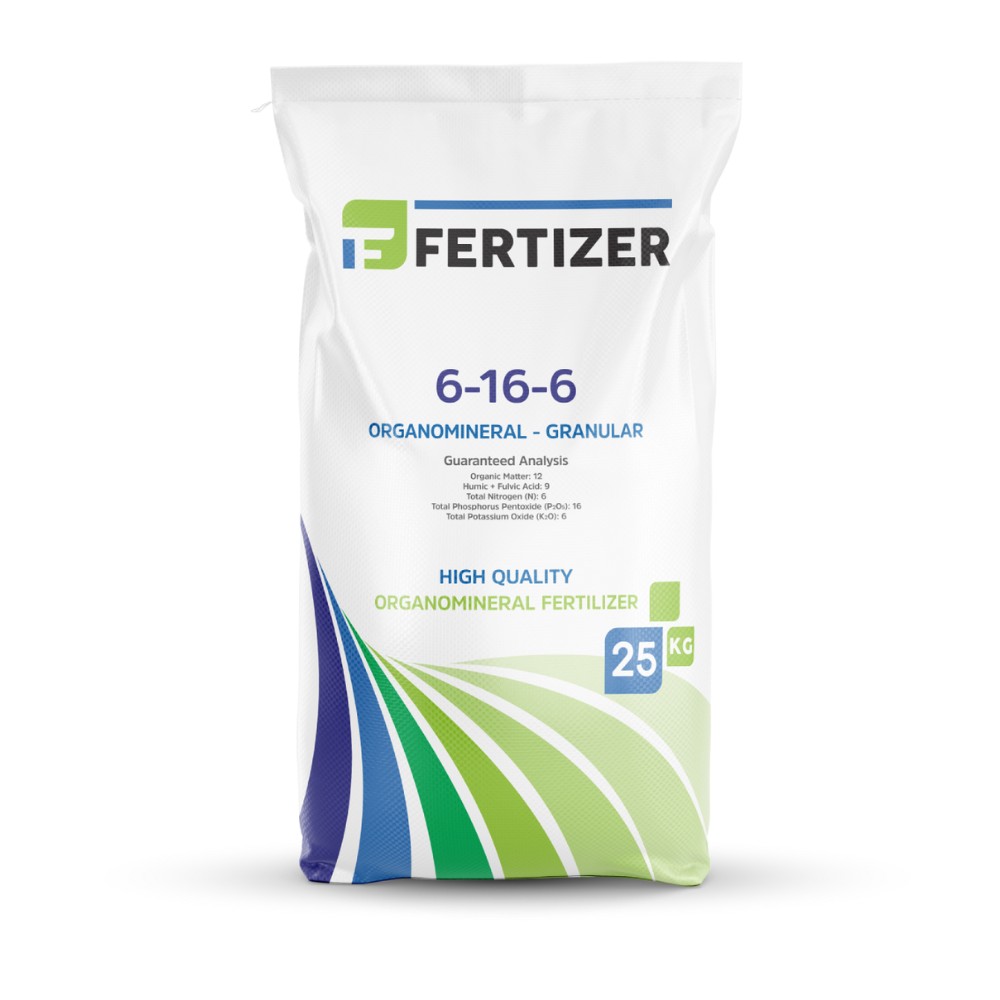
These are particularly valuable where soil degradation, low organic matter, and weak biological activity are reducing nutrient efficiency. Organic fertilizers support soil improvement over time, while organomineral products combine that soil-building benefit with more targeted mineral nutrition.
They are not always the fastest route to immediate correction of heavy nutrient demand, but they can be highly effective in long-term fertility programmes, especially where soil resilience and nutrient retention are limiting factors.
Water-soluble NPK fertilizers
These are often the strongest option for fertigation systems and precision feeding. They allow accurate nutrient delivery during specific growth stages and are well suited to intensive commercial production where timing and uptake efficiency need to be tightly managed.
Their advantage is control. Their limitation is that performance depends on irrigation quality, application discipline, and a well-structured feeding programme.
Liquid fertilizers
Liquid formulations offer speed, flexibility, and ease of blending in many production systems. They can be effective for starter applications, in-season feeding, and targeted nutrient delivery where operational efficiency matters.
They are especially useful in large-scale programmes that require uniform application and compatibility with existing equipment. As with soluble products, however, the agronomic value depends on formulation quality and correct use.
Straight nutrients and raw material-based inputs
In some programmes, the best approach is not a blended multi-nutrient product but a targeted correction using a single nutrient source. This is common where soil tests or tissue analysis show a specific deficiency pattern, or where procurement teams need flexibility in blending and private label production.
For distributors and bulk buyers, access to consistent raw material quality is commercially important because formulation reliability starts with input reliability.
The best fertilizer for crops depends on growth stage
Crop demand changes through the season, so the best fertilizer at planting is often not the best fertilizer at flowering, bulking, or maturation.
For a detailed breakdown, see our guide on Best Fertilizer for Root Growth in Crops.
Early growth usually requires support for root establishment and uniform emergence. Mid-season demand often shifts towards nitrogen, potassium, and secondary nutrients that drive canopy development and biomass accumulation. Later stages may require more targeted feeding for grain filling, fruit sizing, oil content, sugar development, or overall crop finish.
This is why single-shot fertilisation strategies often leave yield on the table. Staged nutrition improves efficiency because nutrients are supplied when crops can use them most effectively.
Commercial factors matter as much as agronomy
For professional buyers, selecting the best fertilizer for crops is not only a technical decision. It is also a supply chain decision.
A well-formulated product loses value quickly if quality varies between batches, if logistics are unreliable, or if the supplier cannot scale with seasonal demand. Importers, wholesalers, and large farm operations need more than a label guarantee. They need production consistency, dependable raw material sourcing, export-ready logistics, and product availability that supports long-term planning.
This is where manufacturer capability matters. A production-driven supplier can offer stronger control over formulation quality, supply continuity, and custom product development than a business operating purely as a trader. For distributors and private label buyers, that difference has direct commercial impact.
How to choose with more confidence
The most reliable route is to combine soil analysis, crop removal data, local agronomic conditions, and production objectives. If the field has structural fertility issues, prioritise products that improve both nutrient supply and soil performance. If the system is intensive and irrigated, precision-fed soluble or liquid formulations may provide better returns. If deficiency risks are known, build secondary nutrients and micronutrients into the programme early rather than waiting for visual symptoms.
It also pays to assess fertilizer options against operational reality. Can the product be applied accurately with current equipment? Does it fit the irrigation system? Is the formulation stable, consistent, and available at the required volume? The best fertilizer on paper is not the best fertilizer if supply breaks down during the season.
For commercial agriculture, the strongest results usually come from integrated programmes rather than isolated products. The winning approach is one that protects soil fertility, improves nutrient efficiency, supports healthy crops under stress, and remains commercially sustainable at scale. That is the standard professional buyers should use when defining the best fertilizer for crops.