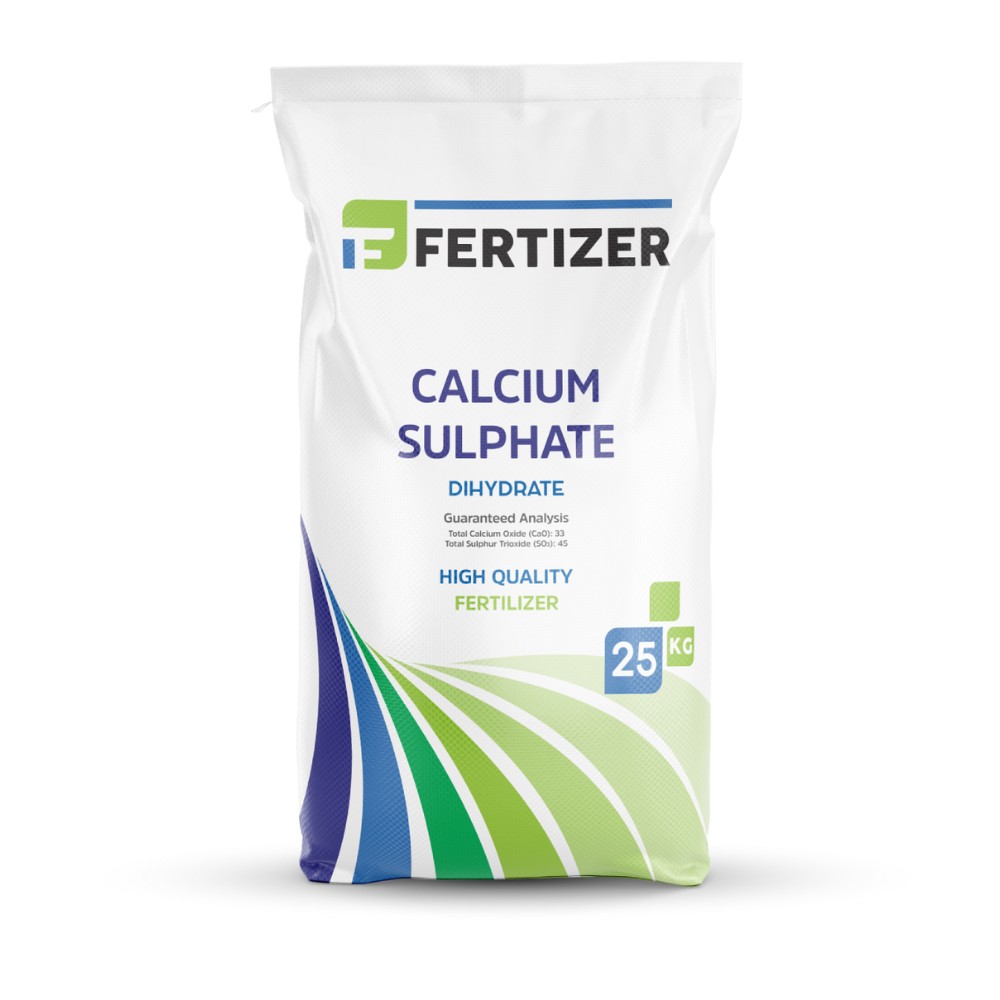
Calcium sulphate dihydrate fertilizer (CaSO4·2H2O) commonly known as agricultural gypsum is a naturally occurring mineral fertilizer that supplies crops with two essential secondary nutrients: calcium (Ca) and sulfur (S) source. Unlike lime-based products, calcium sulfate improves soil structure and nutrient availability without altering soil pH, making it suitable for a wide range of soils and crops.
From a plant nutrition perspective, calcium sulfate plays a vital role in root development, cell wall strength, nutrient transport, and protein synthesis, while also improving soil physical properties and water movement.
Why Calcium Sulphate Matters in Plant Nutrition
Calcium sulfate provides slow but consistent availability of calcium and sulfur in the soil solution. Calcium strengthens plant tissues and improves tolerance to stress, while sulfur supports enzymatic activity and enhances nitrogen utilization. Together, they contribute to stronger plants, higher-quality yields, and improved soil fertility.
Unlike calcium carbonate, calcium sulfate is effective even in neutral or alkaline soils, making it an excellent choice for regions where pH adjustment is not desired.