
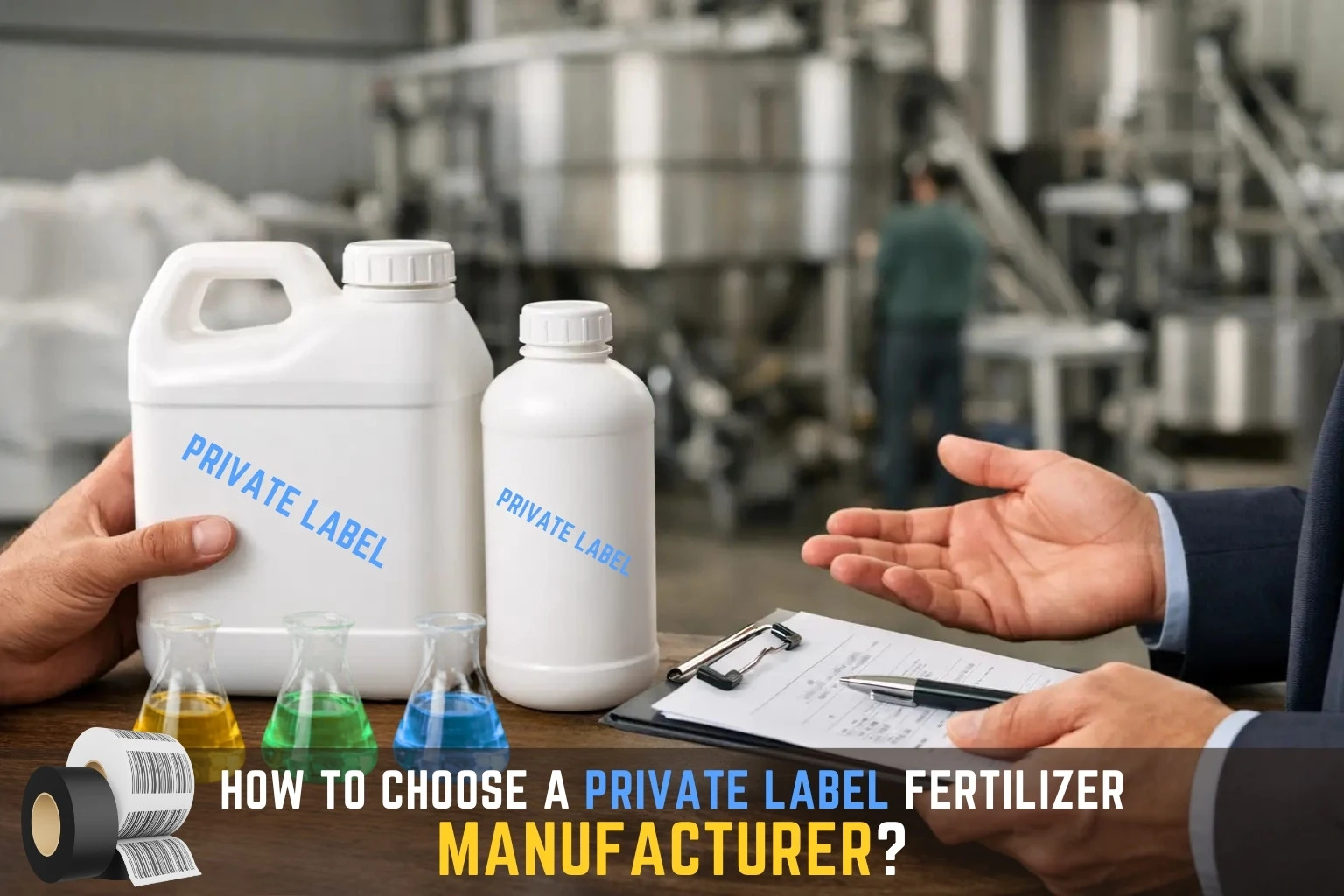
A private label fertilizer manufacturer can strengthen your position in the market fast – but only if the supply model behind the label is built for consistency, compliance and scale. For distributors, importers and agribusiness buyers, the real decision is not simply whose branding goes on the bag. It is whether the manufacturer can protect product performance, delivery reliability and margin across seasons.
In fertilizer, weak private label partnerships usually fail in predictable ways. Formulations drift. Raw material quality varies. Packaging looks fine, but the product does not perform consistently in the field. When that happens, the cost sits with your brand, not the factory’s. That is why selecting the right manufacturing partner matters far more than selecting the lowest initial offer.
What a private label fertilizer manufacturer should actually deliver
A serious private label fertilizer manufacturer does more than fill bags with a standard blend. The right partner should be able to support formulation, sourcing, production, packaging, documentation and export readiness as one connected process. If those functions are split across multiple third parties, errors become harder to control and lead times become harder to predict.
For commercial buyers, this matters because fertilizer is judged in the field. A label can help shelf presence and market recognition, but repeat business comes from crop response, product consistency and dependable supply. If your manufacturer cannot maintain those three points, private labelling becomes a branding exercise with operational risk attached.
The strongest manufacturers also understand that different markets require different product strategies. A distributor serving broadacre crops may need cost-efficient granular products with dependable nutrient release. A horticultural buyer may need water-soluble NPKs, liquid formulations or targeted micronutrients with tighter technical tolerances. The manufacturer should be able to align production capability with the commercial realities of your market.
Why manufacturing depth matters more than trading reach
Many suppliers can offer private label products. Far fewer actually manufacture at scale. That distinction is important.
A trading company can be useful for opportunistic purchasing, especially when buyers need access to multiple origins. But private label supply is a different model. It requires stronger control over formulation accuracy, raw material selection, batch consistency and packing standards. Without production oversight, the supplier often has limited ability to correct problems quickly or maintain uniformity over time.
A manufacturer with in-house production and stable raw material access usually offers better control over the variables that affect both field performance and commercial planning. This includes nutrient concentration, granule quality, solubility, compatibility, moisture management and packaging reliability. It also improves accountability. When one partner is responsible for the product from input sourcing through to shipment, there is less room for ambiguity.
That does not mean every buyer needs a fully bespoke product from day one. In many cases, a proven standard formulation under a private label is the most commercially efficient route. But even then, manufacturing capability remains central because standard products still need standard quality, standard documentation and standard lead times.
Key questions to ask a private label fertilizer manufacturer
The best procurement decisions usually come from asking practical questions early. Before discussing artwork or branding details, buyers should examine whether the manufacturer can support long-term volume and technical requirements.
Start with raw materials. Ask where core inputs are sourced, how quality is checked and whether the manufacturer has enough supply security to support peak demand periods. Input volatility affects both price and consistency, so this is not a minor detail.
Then move to formulation control. Can the manufacturer produce across categories such as organic fertilizers, organomineral products, water-soluble NPKs, liquids and micronutrients? More importantly, can they maintain batch consistency across repeat orders? A broad portfolio is useful, but repeatability matters more than range.
Production flexibility is also worth close attention. Some buyers need container-scale orders of established products. Others need market-specific nutrient ratios, packaging formats or language variations. The right partner should be able to explain where flexibility exists and where standardisation is better for cost and quality control.
Documentation should be part of the same conversation. Export markets often require clear product specifications, labels, certificates and shipping support. Delays caused by incomplete paperwork can be as damaging as production delays, particularly in season-sensitive markets.
Product range and private label strategy
Private label works best when the product portfolio is built around market demand, not around whatever is easiest to produce. That sounds obvious, but it is a common mistake.
Some buyers try to launch too many SKUs too quickly. Others choose formulations based only on headline margin. Both approaches can create stock pressure and weak product rotation. A better strategy is to begin with a focused range that solves clear agronomic needs – for example, base nutrition, fertigation products, foliar support, or products designed to improve nutrient efficiency in stressed soils.
This is where an experienced manufacturing partner adds value. They should be able to help buyers match product categories to crop systems, climatic conditions and channel demand. In practice, that may mean prioritising granular organomineral blends for soil improvement in one market, while positioning high-purity soluble formulations for intensive crop production in another.
There is also a branding question here. Private label products need to look consistent, but branding should not oversell what the formulation cannot deliver. Professional buyers tend to value technical clarity over inflated claims. Straightforward positioning, supported by reliable product performance, usually builds stronger long-term trust.
Compliance, packaging and export readiness
Private label fertilizer supply is not only about manufacturing. It is also about whether the finished product can move efficiently through customs, warehousing and distribution channels without avoidable friction.
Packaging plays a commercial role beyond appearance. It needs to protect product integrity in storage and transit, support clear handling, and fit the realities of your channel. Bulk supply, large bags and standard bagged formats all have different operational implications. The right choice depends on market structure, warehouse handling and customer buying patterns.
Labelling also deserves more attention than it often gets. Market-specific language, nutrient declarations, application guidance and compliance information all need to be accurate. Errors at this stage can delay product launch or create unnecessary risk for the importer.
An export-ready manufacturer should already understand these demands. That includes packing discipline, container loading efficiency and the documentation required for international supply. Buyers serving multiple regions need a partner that can manage complexity without turning every shipment into a custom project.
Cost matters, but total value matters more
Every procurement team looks at price. That is sensible. Yet with private label fertilizer, the cheapest quote is often the most expensive option after claims, delays, performance complaints or stock inconsistencies are taken into account.
A better way to assess value is to look at total commercial impact. Does the product perform consistently enough to support repeat orders? Can the manufacturer scale when demand grows? Are nutrient claims reliable? Can logistics run on schedule? Can the supplier help protect margin without compromising field results?
This is where production-led suppliers tend to stand apart. Strong control over sourcing and manufacturing can improve pricing discipline, but it also supports consistency. That combination matters more than short-term savings from a fragmented supply chain.
For buyers building or expanding a fertilizer brand, stability is a commercial asset. It protects customer confidence. It reduces operational friction. It gives sales teams a product they can stand behind without caveats.
Choosing a partner for long-term growth
The right private label fertilizer manufacturer should feel less like a short-term vendor and more like an operational extension of your business. That does not mean broad promises or vague partnership language. It means practical alignment on product quality, lead times, technical support and supply planning.
Manufacturers with broad formulation capability and export experience are often better placed to support that model, especially when buyers want to grow beyond a narrow product range. At FERTIZER, for example, the combination of in-house production, secure raw material access and a wide crop nutrition portfolio is designed for exactly this kind of scalable private label supply.
If you are assessing potential partners, focus on the fundamentals first. Ask how products are made, how quality is controlled, how supply is secured and how problems are handled when markets tighten. A good label can help open doors. A dependable manufacturer is what keeps them open.
The strongest private label programmes are built on quiet strengths – consistent nutrient quality, dependable production, accurate documentation and products that perform as sold. That is the kind of foundation that gives a fertilizer brand room to grow with confidence.