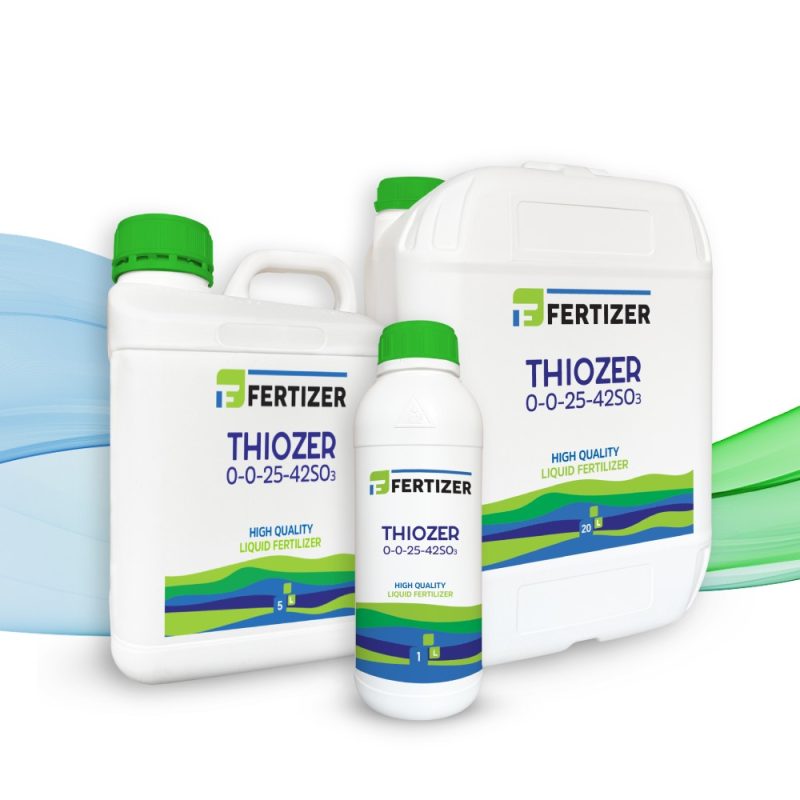
THIOZER is a high-performance liquid potassium thiosulfate 0-0-25 fertilizer developed for crops with high potassium demand during fruit growth and generative stages. With 25% water-soluble potassium oxide (K2O) and 42% water-soluble sulfur trioxide (SO3), it delivers a powerful combination of potassium and sulfur to support yield, quality, and plant resilience.
Potassium plays a vital role in fruit enlargement, color development, firmness, and sugar accumulation. It strengthens plant tissues, improves resistance to lodging, and enhances tolerance to environmental stress. Sulfur supports protein synthesis, enzyme activity, and overall metabolic efficiency. Together, these nutrients promote active photosynthesis and accelerate the transport of assimilates from leaves to fruits, ensuring better fruit filling and reduced premature fruit drop.
THIOZER encourages continuous leaf activity during the generative period, helping crops produce larger, plumper, firmer, and more vibrant fruits. It contributes to improved storage performance and extended shelf life, making it especially valuable for commercial growers targeting high market quality.
This liquid formulation is suitable for foliar application, drip irrigation, and soil application. For best performance, it is recommended to apply THIOZER alone. Adjust application timing and dosage according to crop type and growth stage, especially during fruit enlargement, grain filling, tuber development, and reproductive phases.
Crops Commonly Using THIOZER Fertilizer
THIOZER is widely used across fruit, vegetable, field, and plantation crops, including:
- Fruit crops: citrus, apple, pear, peach, apricot, plum, cherry, grape, kiwi, banana
- Vegetable crops: tomato, pepper, eggplant, cucumber, melon, watermelon, pumpkin
- Root and tuber crops: potato, sugar beet, carrot, onion, garlic
- Field crops: maize, sunflower, wheat, barley, paddy, cotton
- Legumes: beans, chickpeas, lentils
- Tree crops: olive, hazelnut, walnut, pistachio
- Leafy vegetables and ornamental plants
THIOZER (Potassium Thiosulfate) is an effective solution for growers seeking stronger plants, improved fruit and grain quality, enhanced stress tolerance, and higher overall productivity.