
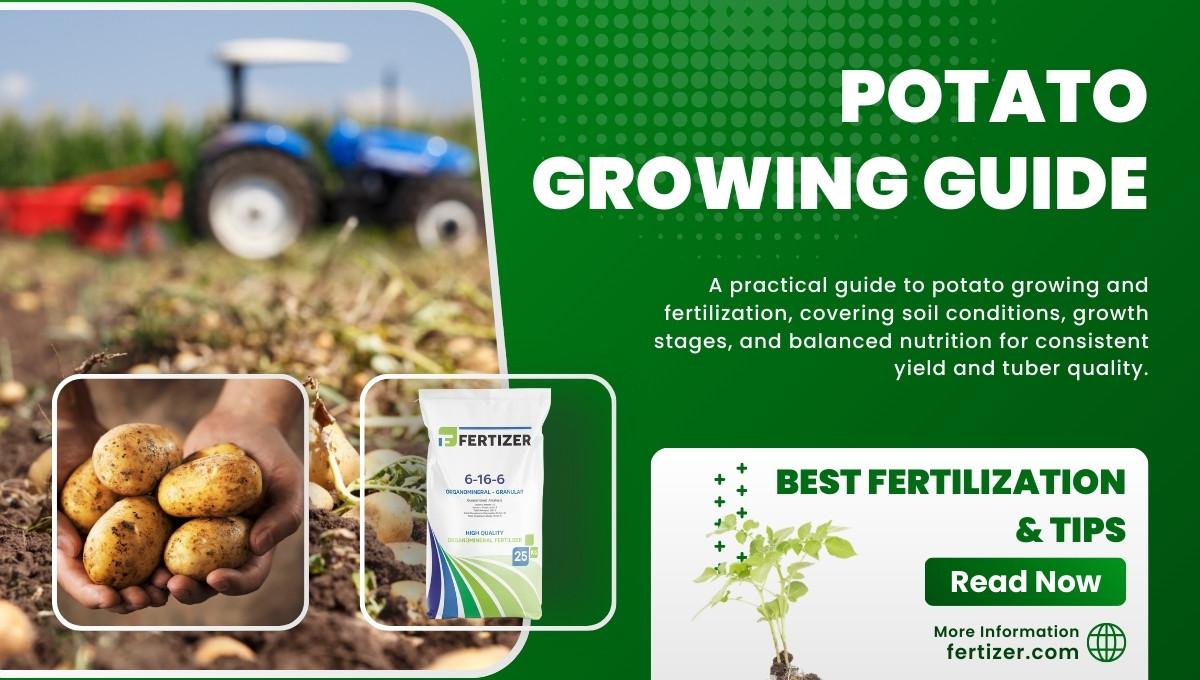
From Soil to Table – Secrets of Efficient Potato Production
Why Is Potato So Important?
Potato (Solanum tuberosum L.) is one of the most widely cultivated food crops worldwide. It plays a key role not only in household consumption but also in industrial processing due to its high yield potential and remarkable adaptability to different agroecological conditions.
However, achieving high quality, uniform tubers and stable yields depends on one critical factor:
👉 A balanced, crop-specific, and stage-oriented fertilization program.
This approach provides high precision in nutrient management, especially when applied using water-soluble NPK fertilizers.
In this comprehensive guide, we examine potato cultivation from soil preparation to harvest and present detailed fertilization strategies using FERTIZER fertilizers.
How Is Potato Cultivated?
1. Potato Types and Areas of Use
How Are Potatoes Classified?
Potatoes are generally divided into two main categories:
- Table Potatoes – Grown primarily for direct consumption
- Processing Potatoes – Used for starch production, chips, frozen and processed products
Sub-Classification Based on Cooking Characteristics
- Soft-cooking varieties – Suitable for mashed potatoes and baking
- Firm-cooking varieties – Preferred for salads and frying
Why Is Starch Content Important?
- Processing potatoes have high starch content
- Table potatoes focus on taste, shape, texture, and cooking quality
2. Soil and Climate Requirements
Ideal Conditions for Potato Growth
- Soil type: Sandy-loam, fertile, well-drained soils
- pH range: 5.5 – 6.8 (can tolerate down to 5.0)
- Soils to avoid: Poor water retention, erosion-prone soils
Climate Factors
- High temperatures, especially during tuber initiation, significantly reduce yield
- Drought stress decreases both tuber size and tuber number
3. Functions of Key Plant Nutrients According to Growth Stages
| Growth Stage | Critical Nutrients | Main Objectives |
|---|---|---|
| Pre-Planting | Phosphorus (P), Zinc (Zn) | Root initiation, strong emergence |
| Vegetative Growth | Nitrogen (N), Magnesium (Mg) | Canopy and leaf development |
| Tuber Initiation | Phosphorus (P), Potassium (K) | Cell division, tuber formation |
| Tuber Bulking | Potassium (K), Magnesium (Mg) | Starch accumulation, tuber growth |
| Maturation | Micronutrients (Zn, B, Mn) | Skin strength, harvest quality |
Hidden deficiencies that occur during these stages can often be corrected quickly and effectively using micronutrient fertilizers.
4. Fertilization Strategy with FERTIZER Products
For optimum yield and quality, basal fertilization, top dressing, and foliar applications must be integrated into a single, well-planned nutrition program.
This holistic approach is implemented more effectively in modern agriculture through the use of liquid fertilizers and drip irrigation systems.
A. Pre-Planting and Root Development
Phosphorus-rich fertilizers play a crucial role in early root development.
Recommended Products and Dosages
- 6-16-6 Organomineral – Starter fertilizer / 20-30 kg/da
- 10-52-10+TE – Via drip irrigation / 2-4 kg/da
- 15-30-15+TE – Via drip irrigation / 2-4 kg/da
B. Vegetative Growth (Canopy Development)
Excess nitrogen leads to delayed maturity and poor tuber quality. Balanced nutrition is essential.
Recommended Products
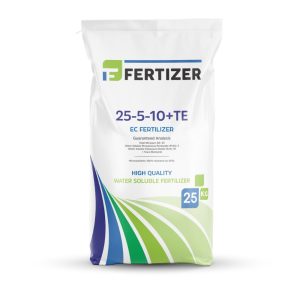
- 25-5-10+TE – Nitrogen-focused formulation
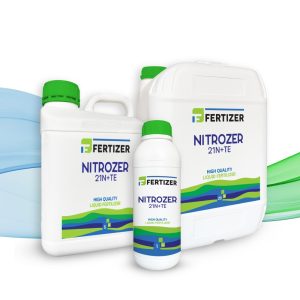
- NITROZER (21% N) – Controlled liquid nitrogen source
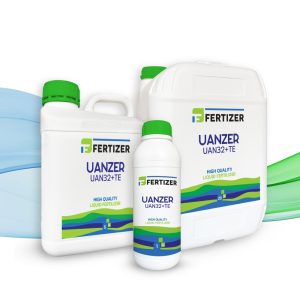
- UANZER (32% N) – Fully compatible with irrigation systems
C. Tuber Initiation Stage
This is the yield-defining phase. Phosphorus and potassium are critical.
Recommended Products
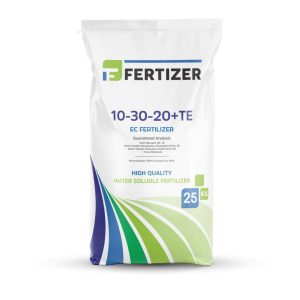
- 10-30-20+TE – Accelerates tuber initiation
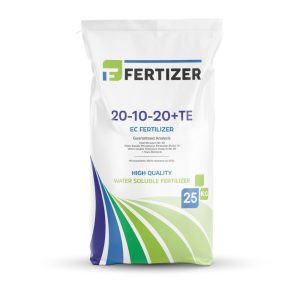
- 20-10-20+TE – Smooth transition from vegetative to storage phase
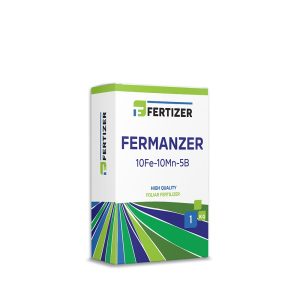
- FERMANZER – Supports enzymatic balance
D. Tuber Development (Bulking Stage)
Potassium and magnesium are key elements for starch accumulation and dry matter content.
Recommended Products
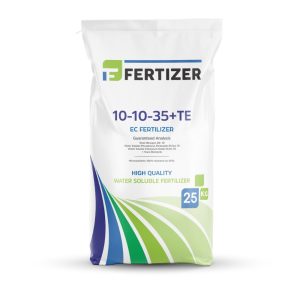
- 10-10-35+TE – High-potassium formulation
- 7-7-40+16SO₃+TE – Sulfur-enhanced potassium fertilizer
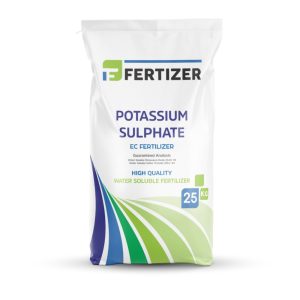
- POTASSIUM SULFATE – Chloride-free potassium source

5. Foliar Fertilization and Stress Management
Is Foliar Nutrition Effective in Potato?
Yes, especially under the following conditions:
- Drought stress
- Light-textured soils
- Periods of high nutrient demand
Advantages
- Rapid nutrient uptake
- Improved stress tolerance
- Uniform tuber development
Recommended Products
- FEZINZER (10Fe + 10Zn) – Chlorosis correction and photosynthesis support
- CALBORZER (10N-15Ca-B) – Improved skin strength and shelf life
- SEVENZER (7Fe-7Zn-7Mn-7Cu) – Broad-spectrum micronutrient support
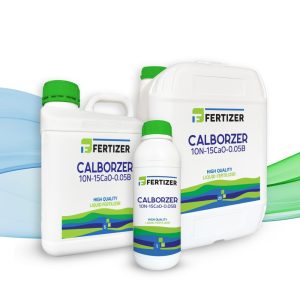
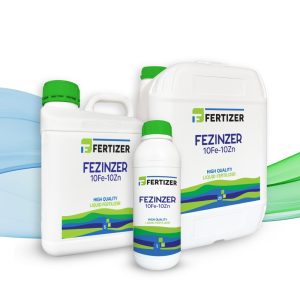

Applications carried out under these conditions are rapidly absorbed by the plant and show quick effects through foliar application.
Seaweed-Based Biostimulants – Are They Beneficial?
Absolutely. These products:
- Enhance stress resistance
- Improve root respiration
- Support tuber uniformity
- Stabilize yield performance
Sample Potato Fertilization Program (Per Decare)
| Growth Stage | Products Used | Application Method | Dosage |
|---|---|---|---|
| Pre-Planting | 6-16-6 | Basal application | 20–30 kg |
| Vegetative | NITROZER + 25-5-10+TE | Soil / Foliar | 2–4 L + 2–3 kg |
| Tuber Initiation | 10-30-20+TE + CALBORZER / CALZER | Soil / Foliar | 300–400 g / 100 L + 400 mL |
| Tuber Development | 10-10-35+TE + POTASSIUM SULPHATE | Soil / Foliar | 3–4 kg + 2–3 kg |
| Maturation | SEVENZER or FEZINZER | Foliar | 200–400 g / 100 L |
Final Recommendation – Reduce Disease Pressure with Biological Support
To minimize disease risk, colonizing the root zone and leaf surface with natural antagonistic microorganisms is strongly recommended.
When combined with FERTIZER nutrition solutions, this approach:
- Improves root health
- Reduces disease pressure
- Ensures stable and sustainable yields year after year
Precision Fertilization = High Quality and Profitability
Potato farming is both a science and an art. With the right product selection, proper timing, and accurate dosage:
- Yield increases
- Quality is preserved
- Production costs decrease
- Environmentally responsible farming is achieved
👉 Take your crop to the next level with FERTIZER fertilizers.