
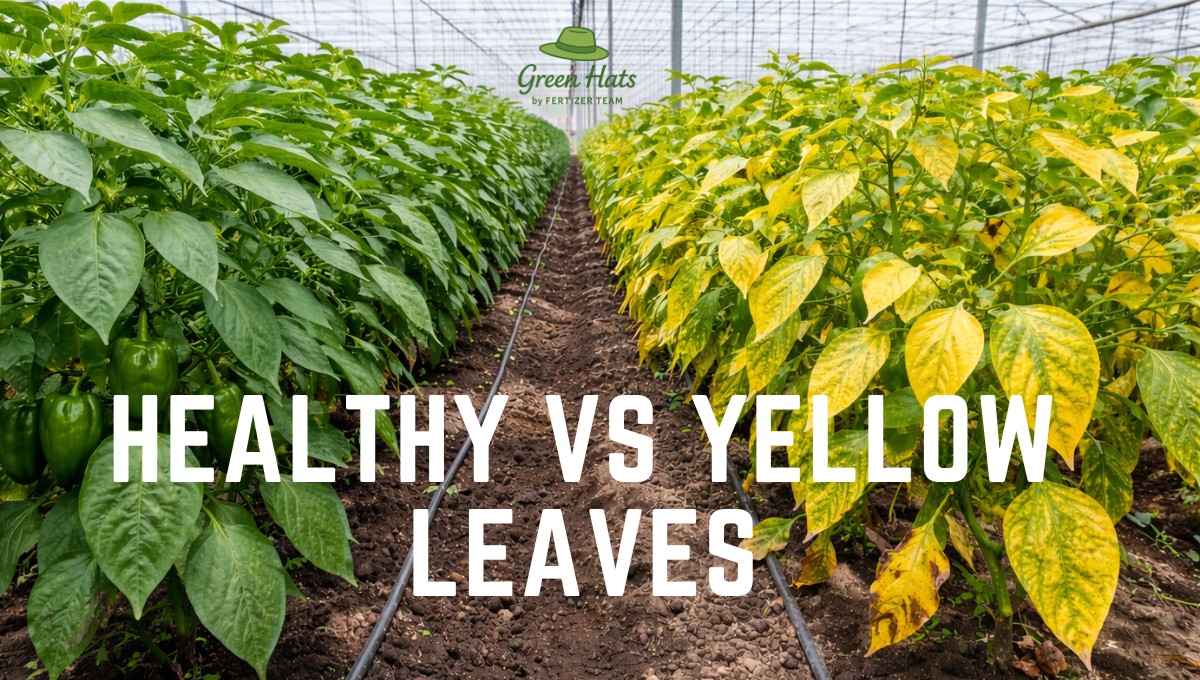
You walk into your field or greenhouse, and something doesn’t look right. The plants are there, still growing… but the color is off. Instead of a healthy green, you start seeing pale leaves. Then yellow patches. Sometimes the whole leaf turns yellow.
This is one of the most common problems growers face – yellow leaves plants.
And here’s the thing: yellowing is not the problem itself. It’s a signal. The plant is telling you something is wrong. If you ignore it, growth slows down, yield drops, and quality suffers.
The sooner you understand what’s causing it, the easier it is to fix.
What’s Actually Happening?
Healthy leaves are green because the green color is given by the chlorophyll molecule. Chlorophyll is the place where photosynthesis takes place in the plant.
When leaves turn yellow, it means chlorophyll is breaking down or not being produced properly.
That can happen for several reasons. Some are simple. Some are more serious.
Let’s go through the real causes.
1. Nitrogen Deficiency – The Most Common Reason
If your older leaves are turning yellow first, especially from the bottom of the plant, nitrogen is usually the issue.
Nitrogen is mobile. When the plant can’t get enough, it moves nitrogen from old leaves to new growth. The result? Older leaves lose their green color.
You’ll notice:
- Uniform yellowing (not patchy)
- Starts from older leaves
- Slow growth
This is classic nutrient deficiency plants behavior.
What works;
Give the plant a balanced or nitrogen-rich fertilizer.
If the plant is in a vegetative stage (growing leaves), using a high nitrogen fertilizer helps a lot. It pushes green growth and restores color quickly.
If the crop is in a general growth phase, a balanced formula like balanced NPK fertilizer is safer.
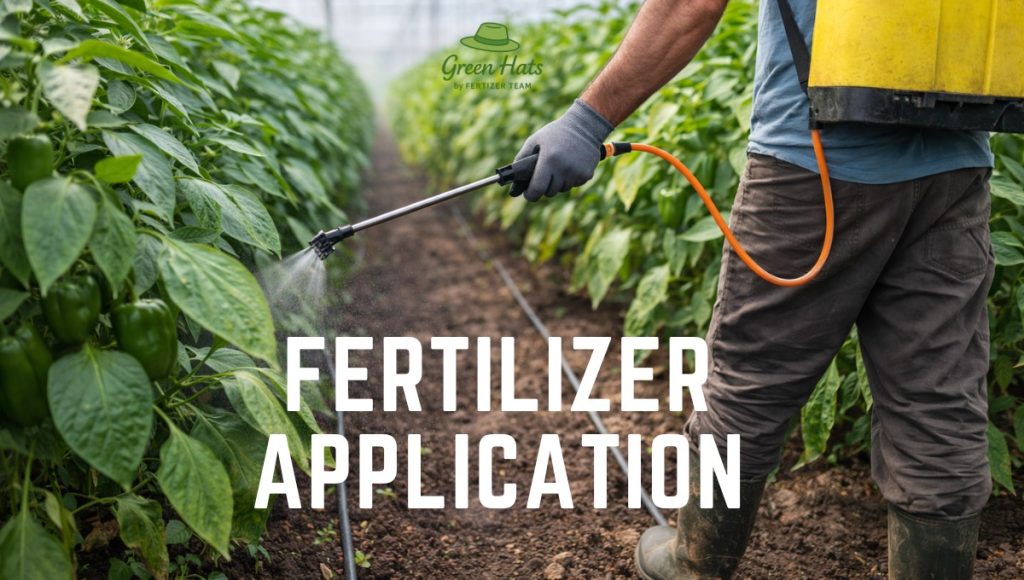
Apply through irrigation or foliar feeding, depending on your system.
2. Overwatering – Roots Can’t Breathe
A lot of growers think more water = better growth. That’s not always true.
When soil stays too wet, roots can’t get oxygen. Without oxygen, roots slow down or even start to rot. Then nutrient uptake stops.
The leaves start yellowing, even if there are nutrients in the soil.
You’ll see:
- Yellow leaves all over the plant
- Soil constantly wet
- Weak, soft growth
Sometimes it looks like deficiency, but it’s actually a root problem.
What works;
- Reduce irrigation frequency
- Improve drainage
- Let the soil dry slightly between watering
Don’t rush to add more liquid fertilizer or water soluble NPK fertilizer before fixing the root issue. Otherwise, you waste product.
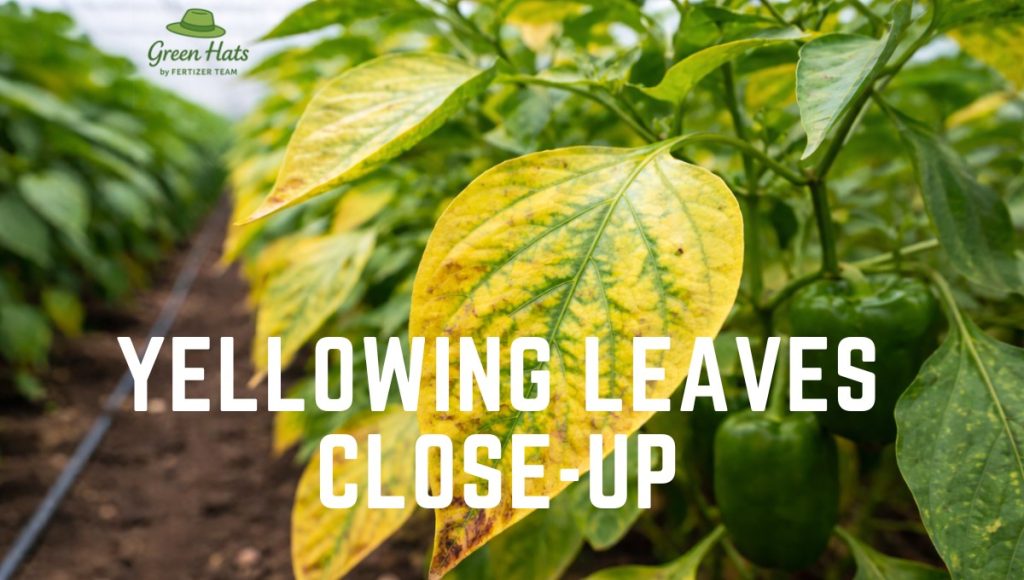
3. Iron Deficiency – Yellow Leaves, Green Veins
This one is easy to recognize.
New leaves turn yellow, but the veins stay green. This pattern is very typical.
It usually happens in:
- High pH soils
- Calcareous soils
- Over-irrigated fields
Iron is present in the soil, but the plant can’t absorb it.
So even if your fertilization is correct, you still get plant leaves turning yellow.
What works;
Use iron chelate fertilizer. It’s designed to stay available even in high pH conditions.
Apply it through drip irrigation or as a foliar spray.
You’ll often see improvement in new leaves within a few days.
4. Potassium or Magnesium Deficiency
If yellowing starts at the edges of leaves or between veins on older leaves, you might be dealing with potassium or magnesium deficiency.
Signs:
- Yellowing along leaf edges
- Brown tips later on
- Weak plant structure
This can affect fruit quality as well, not just leaf color.
What works;
Balanced feeding is key.
A fertilizer like 20-20-20 NPK helps maintain overall nutrition, especially when you’re not sure which element is missing.
5. Poor Soil Conditions
Sometimes the issue is not the fertilizer. It’s the soil itself.
Problems like:
- High salinity is a common problem in many soils. When salt levels increase, plants struggle to absorb water and nutrients, which often leads to yellowing leaves. In these situations, applying a soil salinity corrector can improve soil conditions and support healthier growth.
- Compacted soil
- Poor organic matter
These reduce nutrient availability and root function.
Even if you apply fertilizer, the plant can’t use it properly.
What works;
- Improve soil structure
- Improving soil structure is essential for long-term plant health. Using organic or organomineral fertilizers can improve soil structure, increase microbial activity, and help plants absorb nutrients more efficiently.
- Flush salts if needed
Think long-term. Fixing soil gives more consistent results than chasing deficiencies.
6. Stress (Temperature, Transplant, Chemicals)
Plants under stress often show yellowing.
Common stress factors:
- Sudden temperature changes
- Transplant shock
- Chemical burns
- Excess pesticide use
In these cases, yellowing is temporary, but it can still affect yield.
What works;
- Avoid sudden changes
- Apply fertilizers carefully (correct dose)
- Support plants with balanced nutrition
7. Root Damage
If roots are damaged, the plant can’t take up nutrients.
This can happen due to:
- Nematodes
- Diseases
- Mechanical damage
- Waterlogging
The leaves turn yellow because the plant is basically starving, even in fertile soil.
What works;
Check the root system.
If roots are brown, soft, or smell bad, you have a root issue. Fix that first before adding more nutrients.
How to Identify the Real Cause Quickly
Here’s a simple way to diagnose leaf yellowing causes:
- Old leaves yellow first → Nitrogen deficiency
- New leaves yellow, green veins → Iron deficiency
- Edges yellow/brown → Potassium or magnesium
- All leaves yellow, wet soil → Overwatering
- Patchy yellowing → Stress or root issue
Look at the pattern. That tells you more than anything.
Where Fertilizers Help (Without Overdoing It)
Fertilizers are part of the solution, but only if used correctly.
Here’s how to use them practically:
When growth is weak and pale
Use 30-10-10 NPK
- High nitrogen boosts leaf growth
- Good for early stages
- Helps recover green color fast
When you need balance
Use 20-20-20 NPK
- Suitable for most crops
- Keeps plants stable
- Prevents multiple deficiencies
When you see yellow young leaves
Use Iron Chelate
- Especially in high pH soils
- Works fast
- Best applied through drip or foliar
Don’t mix everything blindly. Start with the most likely problem.
Practical Tips From the Field
This is where most people make mistakes.
1. Don’t guess – observe
Before adding anything, look carefully:
- Which leaves are yellow?
- Old or new?
- Uniform or patchy?
This tells you the cause.
2. Don’t over-fertilize
More fertilizer doesn’t mean faster recovery.
Too much fertilizer can:
- Burn roots
- Increase salinity
- Make the problem worse
Start with a moderate dose.
3. Check irrigation first
Many cases of yellow leaves plants are actually water-related.
Fix irrigation before changing your fertilization program.
4. Watch pH levels
High pH locks nutrients like iron.
If your soil or water pH is high, you will keep seeing yellowing no matter how much you fertilize.
5. Use foliar feeding for quick results
If the problem is urgent, foliar application works faster.
Especially for:
- Iron deficiency
- Mild nitrogen deficiency
Leaves absorb nutrients directly.
6. Keep records
Write down:
- What you applied
- When you applied it
- What changed
This helps you avoid repeating mistakes.
The Simple Way to Think About It
When you see plant leaves turning yellow, don’t panic.
Think step by step:
- Is it water?
- Is it nutrient deficiency?
- Is it soil or root issue?
Then act accordingly.
Sometimes the solution is as simple as adjusting irrigation. Other times, a small dose of the right fertilizer solves it.
Final Advice Regarding Yellow Leaves Plants
Yellow leaves are not random. There is always a reason.
If you look closely, the plant shows you what’s wrong.
Don’t rush. Don’t guess. Observe first, then act.
Most of the time, once you correct the cause, the plant recovers faster than you expect.
Need help choosing the right fertilizer for your crop? Contact our team for tailored recommendations and export solutions.