
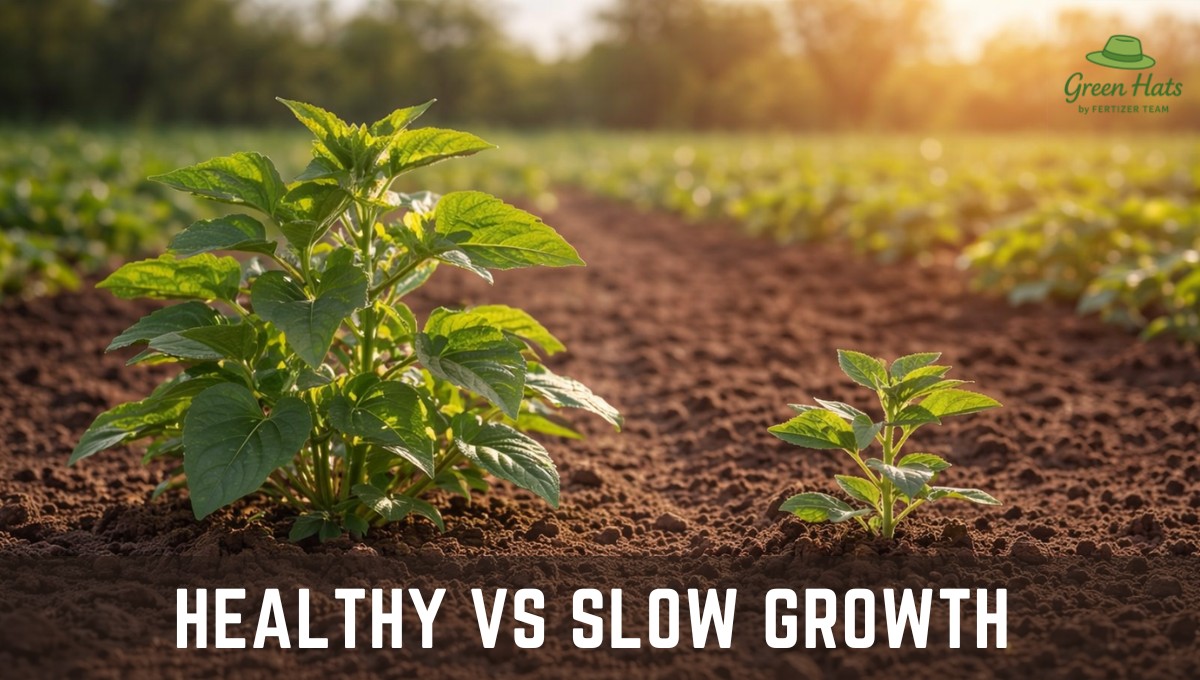
You look at your field, your greenhouse, or even your garden…
And something feels off.
Plants are alive. Leaves are there. Nothing looks “dead”.
But growth is slow. Too slow.
No strong shoots. Growth is limited. The plant lacks energy.
This is one of the most frustrating situations because it doesn’t look like a clear problem. But in reality, slow plant growth is already a warning sign.
And if you ignore it, yield will suffer. Not later. Already.
What Is Really Happening?
Plants don’t grow slowly without a reason.
They are always reacting to something:
- Not enough nutrients
- Poor root development
- Stress
- Wrong irrigation
- Micronutrient deficiency
The tricky part is this:
Plants can survive in bad conditions
But they won’t grow
That’s the difference.
You might think everything is “okay” because nothing is dying.
But your plant is just stuck.
Why Plants Grow Slowly (Real Reasons)
Let’s break it down in a practical way.
1. Weak Roots = Slow Growth
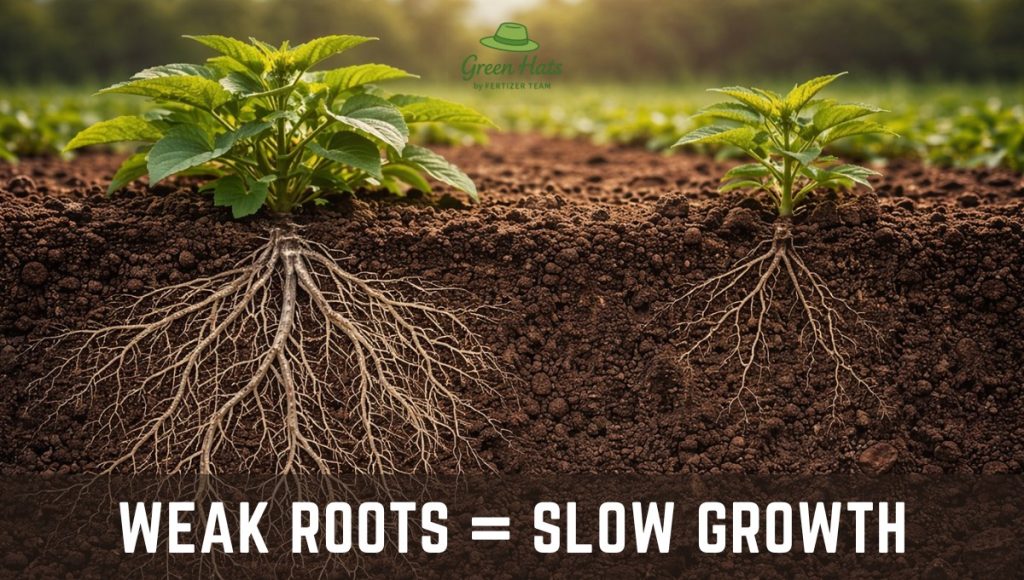
Everything starts below the soil.
If roots are weak, nothing above the soil can perform well.
Common signs:
- Plants stay small
- Leaves look pale
- Growth is inconsistent
Why it happens:
- Poor soil structure
- Low phosphorus
- Transplant shock
- Cold soil
Roots need energy to expand. Without it, the plant cannot explore the soil.
2. Nutrient Imbalance (Very Common)
This is probably the #1 reason behind plant growth problems.
Farmers often focus only on nitrogen.
But plants need balance.
If one nutrient is missing, the whole system slows down.
For example:
- Low nitrogen → weak leaves, slow growth
- Low phosphorus → poor roots
- Low potassium → weak structure
Even worse, the plant might have nutrients in the soil but cannot absorb them properly.
3. Micronutrient Deficiency (Silent Problem)
This one is often ignored.
You don’t always see dramatic symptoms.
But growth simply slows down.
Especially:
- Zinc deficiency → stunted growth
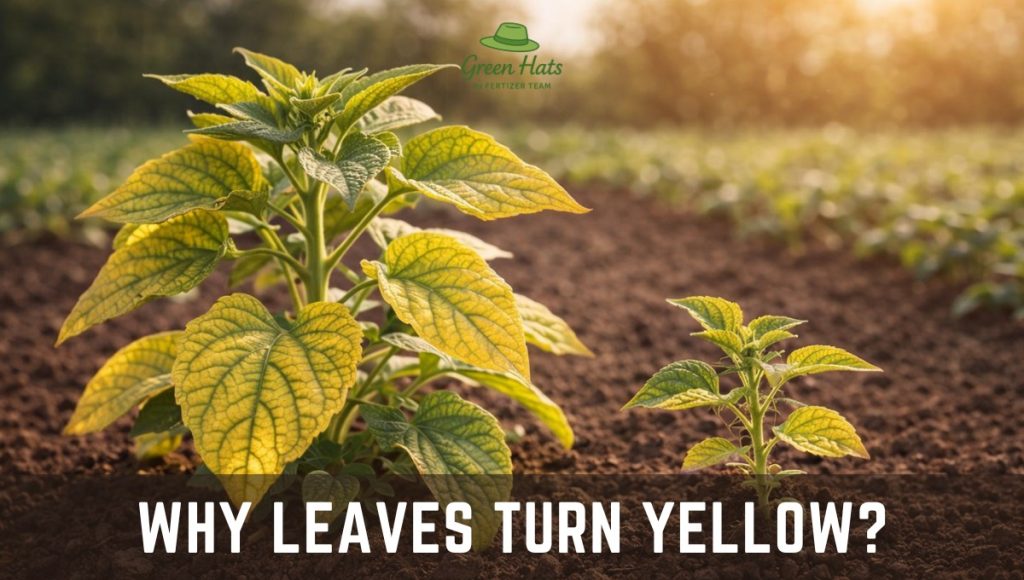
- Iron deficiency → yellowing leaves
- Boron deficiency → weak cell development
If your plants show symptoms like yellowing leaves, it may indicate nutrient deficiencies.
Micronutrients don’t need large amounts.
But without them, the plant cannot function properly.
4. Poor Soil Conditions
Sometimes the issue is not fertilizer.
It’s the soil itself.
Problems include:
- Compacted soil
- Low organic matter
- High pH or low pH
- Poor drainage
Even if you apply nutrients, roots can’t access them.
So the plant stays slow.
5. Water Stress (Too Much or Too Little)
Both overwatering and underwatering slow growth.
Too little water:
- Nutrients can’t move
- Roots stop growing
Too much water:
- Roots suffocate
- Oxygen disappears
In both cases, plant metabolism slows down.
6. Crop-Specific Needs
Every crop behaves differently.
Potatoes, beans, carrots… all need different feeding strategies.
If you use a generic approach, growth will not be optimal.
You can see detailed examples here:
- Different crops require specific feeding strategies, such as a proper potato fertilization program.
- Some crops, like beans, are sensitive to excess nitrogen. Understanding bean nutrient requirements helps prevent slow growth and poor development.
Understanding the crop is just as important as feeding it.
How to Improve Plant Growth (What Actually Works)
Now let’s talk solutions.
Not theory. Real steps.
Step 1: Fix the Root Zone First
If roots are not healthy, nothing else matters.
What to do:
- Improve soil structure
- Avoid overwatering
- Use phosphorus early
In early stages or after transplanting, plants need a strong push for root development.
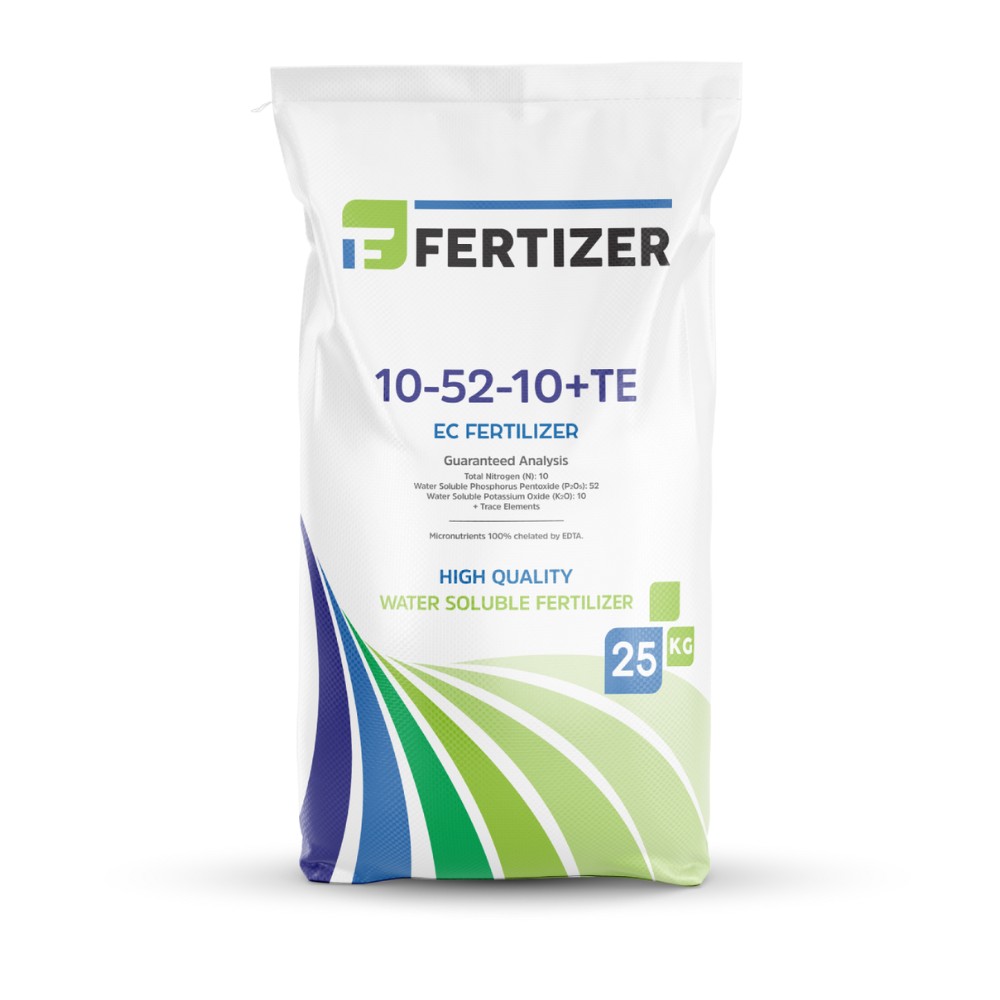
This is where a high-phosphorus fertilizer like 10-52-10 can help roots establish faster.
If roots grow, everything improves.
Step 2: Give Balanced Nutrition
Don’t chase only nitrogen.
Plants need a balanced diet to grow steadily.
A balanced fertilizer like.
can support overall development because it provides:
- Nitrogen for growth
- Phosphorus for roots
- Potassium for strength
This kind of feeding is especially useful when:
- Growth is generally slow
- Plants look weak but not sick
Step 3: Support Early Growth Properly
Early stage mistakes affect the entire season.
If the plant starts slow, it usually stays slow.
During early growth, a starter fertilizer helps plants establish faster and develop stronger roots.
can help young plants:
- Build strong roots
- Establish quickly
- Gain early momentum
This stage is critical. Don’t underestimate it.
Step 4: Don’t Ignore Micronutrients
This is where many growers lose performance.
You can apply NPK perfectly…
But if zinc or iron is missing, growth still slows down.
For example:
- Zinc improves enzyme activity and growth regulation
- Boron supports cell division
- Iron is essential for chlorophyll
Zinc plays a key role in plant metabolism. A zinc powder fertilizer can help improve growth and enzyme activity.
can help correct zinc-related issues.
Micronutrient deficiencies are often overlooked, but they can seriously limit plant development. In such cases, using a micronutrient fertilizer can help restore balance. For more specific needs, a zinc manganese boron powder fertilizer can support plant metabolism and improve growth.
can support both vegetative and reproductive growth.
These are not “extra” nutrients.
They are essential.
Step 5: Adjust Irrigation
Water is not just water.
It controls:
- Nutrient movement
- Root respiration
- Soil structure
Practical tips:
- Water deeply, not frequently
- Avoid constant wet soil
- Check drainage
Roots need both water and oxygen.
Practical Tips From the Field
Let me share what actually makes a difference.
✔ Don’t Wait for Visible Symptoms
If you wait until the plant shows clear deficiency,
you have already lost time.
Slow plant growth is already a symptom.
✔ Feed in Small, Regular Doses
Instead of heavy applications:
- Feed regularly
- Keep nutrients available
Plants prefer consistency.
✔ Watch New Growth, Not Old Leaves
Old leaves show past problems.
New growth shows the current situation.
If new leaves are weak, the problem is ongoing.
✔ Check Roots Physically
Pull out a plant.
Healthy roots:
- White
- Active
- Spreading
Bad roots:
- Brown
- Short
- Weak
This tells you more than leaves.
✔ Avoid Over-Fertilizing
More fertilizer does not mean faster growth.
Too much can:
- Burn roots
- Block nutrient uptake
- Slow growth even more
Balance is everything.
Mistakes That Slow Growth Even More
These are very common.
❌ Only Using Nitrogen
Leads to:
- Soft growth
- Weak roots
- Imbalance
❌ Ignoring Soil Condition
You can’t fix poor soil with fertilizer alone.
❌ Overwatering
Many growers think more water = faster growth.
It usually does the opposite.
❌ Ignoring Micronutrients
Small elements, big impact.
❌ Late Intervention
If you react too late, you lose yield potential.
Simple Advice
If your plants are not growing fast, don’t guess.
Check these 3 things first:
- Roots
- Nutrition balance
- Micronutrients
Fix these, and growth usually improves quickly.
You don’t need complicated solutions.
Most of the time, plants just need:
- Strong roots
- Balanced feeding
- A little support
Get these right… and you’ll see the difference within days, not weeks.
If your plants are not growing as expected, choosing the right fertilizer can make a real difference.
👉 Contact us to find the best solution for your crop.