
Every farmer experiences this at some point.
You plant on time.
You irrigate regularly.
You apply fertilizers.
The crop looks decent.
But when harvest comes, the yield is lower than expected.
Not terrible. Just… disappointing.
You start asking the same questions many growers ask every season.
Why is the field not producing what it should?
What am I missing?
How can I increase crop yield without spending a fortune on inputs?
This matters more than ever today. Input costs keep rising. Fertilizer prices fluctuate. Weather is less predictable.
So improving productivity isn’t just about growing more. It’s about protecting profitability.
The good news is that in most cases the problem is not mysterious. When yield stalls, there are usually a few clear reasons.
Once you identify them, it becomes much easier to increase plant productivity and boost crop production in a natural and sustainable way.
Let’s break it down from the field perspective.
Improve Soil Health
If yield is stagnating, the first place to look is always the soil.
Many farmers focus on fertilizers, but the real question should be:
Is the soil actually able to support healthy plant growth?
Soil health determines how well plants access water, nutrients, and oxygen.
Poor soil often shows these signs:
- Hard or compacted layers
- Low organic matter
- Poor water infiltration
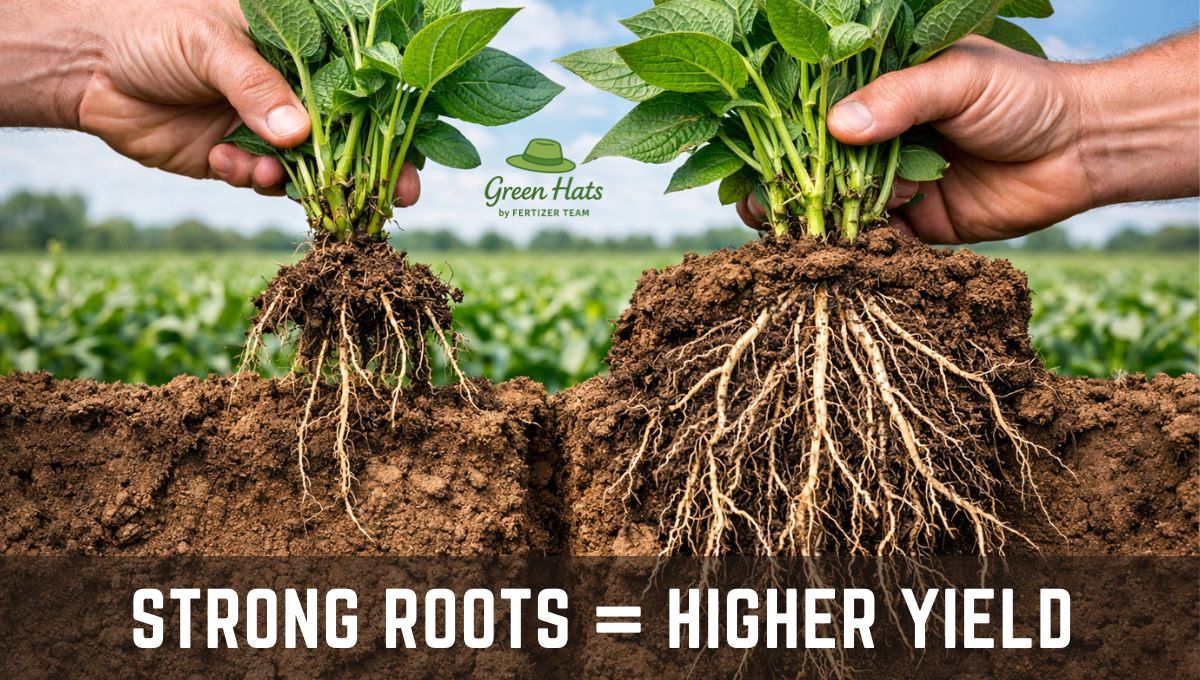
- Weak root development
In these conditions, plants struggle even if fertilizers are applied.
Nutrients may be present in the soil, but plants cannot absorb them efficiently.
This is why improving soil structure often produces bigger yield improvements than simply adding more fertilizer.
One effective approach is increasing organic matter and humic substances in the soil.
Natural soil conditioners derived from leonardite are widely used for this purpose. For example, products such as Leonardite help improve soil structure and stimulate microbial activity.
When soil biology becomes active again, several things start happening naturally:
Roots penetrate deeper.
Water retention improves.
Nutrients become more available.
All of these changes contribute to a healthier root zone, which is the foundation of higher yields.
Another useful tool in improving soil condition is humic acid. Many growers apply humic-based products like Humizer to improve nutrient uptake and soil fertility over time.
Healthy soil does not just feed plants. It creates an environment where plants can perform at their full potential.
Optimize Plant Nutrition
Many growers think the key to higher yields is simply applying more fertilizer.
In reality, plants respond much better to balanced nutrition than to large quantities of a single nutrient.
A plant needs a full set of nutrients working together:
Nitrogen supports vegetative growth.
Phosphorus supports energy transfer and root development.
Potassium regulates water balance, stress resistance, and fruit formation.
If one element is missing, the plant cannot fully utilize the others.
This is why nutrient imbalance often leads to lower productivity.
One way to maintain balanced nutrition is by using water-soluble fertilizers during key growth stages.
During flowering and fruit formation, crops require higher potassium levels. This helps the plant direct energy toward yield formation.
Fertilizers like NPK 10-10-40 are commonly used during these stages because they supply potassium along with balanced nutrients through fertigation.
Used at the right moment, they help improve fruit size, quality, and overall productivity.
Farmers looking to increase crop yield often notice that correcting nutrient balance alone can dramatically improve plant performance.
But nutrition only works well when the root system is strong.
Strengthen Root Development
Healthy roots are the engine of crop productivity.
Unfortunately, roots are often ignored because they are hidden underground.
You only notice the problem when plants start struggling above the surface.
Weak roots usually mean:
- poor nutrient absorption
- higher sensitivity to drought
- slower growth
- reduced yields
Several conditions can limit root development.
Compacted soil layers prevent roots from expanding.
Low organic matter reduces microbial activity.
Poor nutrient mobility limits root growth.
Supporting root development early in the season is one of the most reliable ways to increase plant productivity.
Humate-based soil conditioners are commonly used to stimulate root growth and improve nutrient availability.
For example, potassium humate products such as Blackzer help improve soil chemistry and root development.
Many growers report that after improving root conditions, crops become more resilient.
Plants tolerate stress better.
Nutrient uptake becomes more efficient.
Growth becomes more uniform across the field.
In simple terms, stronger roots create stronger crops.
Manage Micronutrients
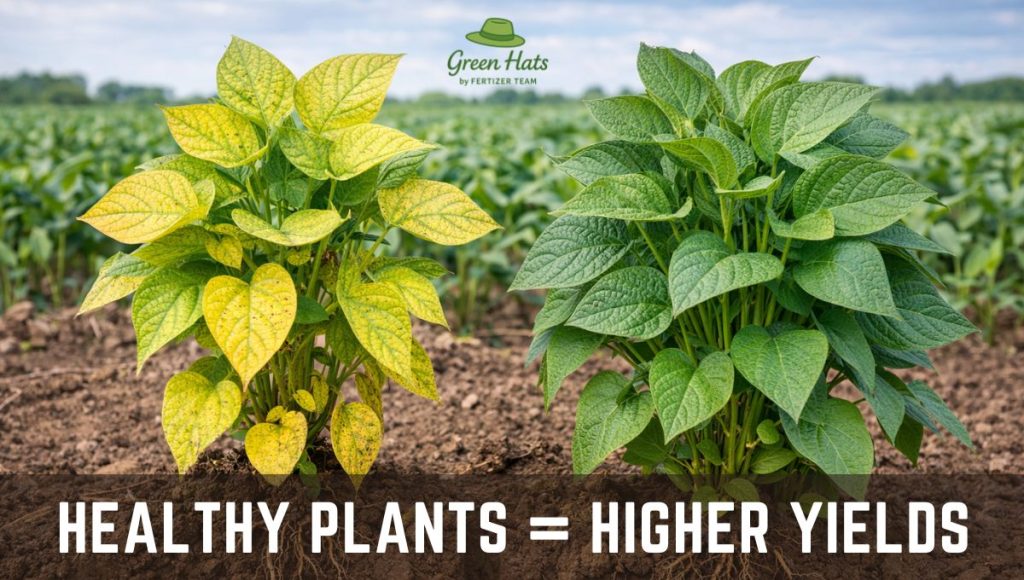
Micronutrients are often the hidden factor behind disappointing yields.
Unlike nitrogen or potassium deficiencies, micronutrient problems can be subtle.
Plants may show small symptoms like:
- pale or yellow leaves
- slow growth
- poor flowering
- uneven development
These issues often appear even when soil tests show adequate macronutrients.
Micronutrients such as zinc, iron, manganese, and boron play a critical role in plant metabolism.
They activate enzymes responsible for:
- photosynthesis
- protein synthesis
- hormone production
Without these micronutrients, plant metabolism slows down.
Yield potential drops even if plants look generally healthy.
When micronutrient availability becomes limited, growth stimulants and balanced nutrient products can help restore plant activity.
Some growers use plant metabolism enhancers such as Powerzer 11-7-10+TE liquid fertilizer to support nutrient utilization and metabolic processes during key growth periods.
When plants regain metabolic balance, their ability to convert nutrients into yield improves significantly.
Increase Photosynthesis Efficiency
Photosynthesis is the process that ultimately drives crop productivity.
If photosynthesis slows down, yield potential drops immediately.
Many environmental factors affect this process.
High temperatures, water stress, nutrient deficiencies, or poor root health can reduce photosynthetic activity.
When this happens, plants produce less energy.
Less energy means fewer flowers, smaller fruits, and lower biomass production.
Improving photosynthesis efficiency often starts with basic agronomic practices.
Maintain healthy leaves through balanced nutrition.
Ensure adequate irrigation during critical growth stages.
Avoid nutrient deficiencies that limit chlorophyll production.
Many nutrient deficiencies first show up in the leaves. When plants start turning pale or yellow, growers often assume it’s a nitrogen problem, but that isn’t always the case. Different nutrient deficiencies can produce similar symptoms, which is why it helps to understand what the leaves are actually telling you. If you want a practical breakdown of these symptoms, this guide on yellow leaves on plants explains the most common causes and how to recognize them early.
Understanding these symptoms helps growers correct problems before they affect yield.
Use Modern Fertilization Techniques
Traditional fertilizer broadcasting can still work, especially in large fields. But many farmers today are switching to more precise methods because they simply use nutrients more efficiently.
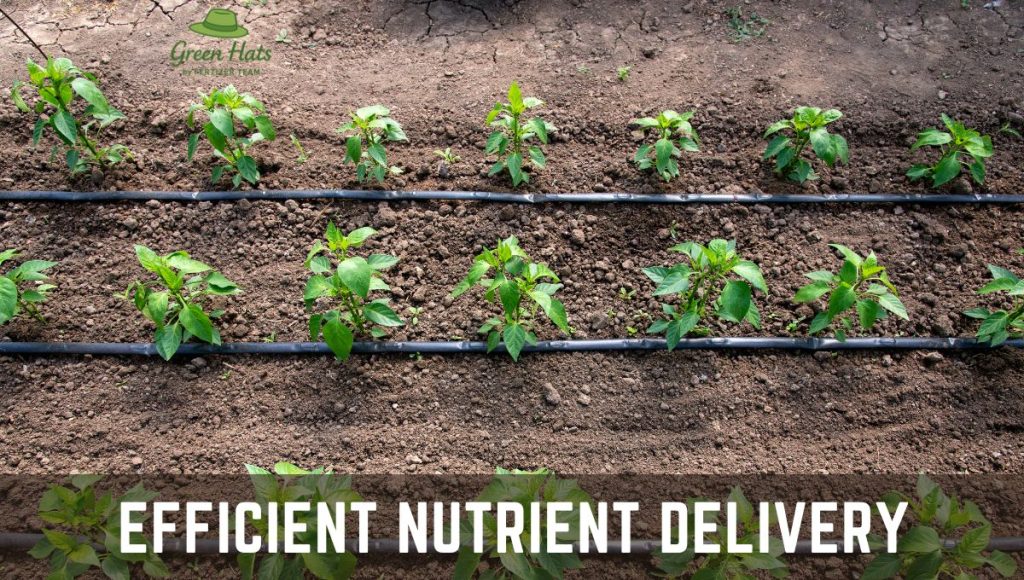
One of the biggest changes in modern farming is fertigation.
Instead of spreading fertilizer across the soil surface, nutrients are delivered directly through irrigation systems. This allows plants to receive nutrients exactly where they need them in the root zone.
The result is usually better nutrient efficiency and less fertilizer loss.
For fertigation systems to work properly, the fertilizer must dissolve completely in water. That’s why many growers prefer water-soluble fertilizers, which dissolve quickly and move easily through irrigation lines. These products are designed for rapid uptake and are widely used in drip irrigation systems where precise feeding is important. You can explore different formulations in the water soluble fertilizers category here.
At the same time, macronutrients alone are not enough to maintain high productivity. Crops also require small amounts of trace elements such as zinc, iron, and manganese. When these micronutrients become unavailable in the soil, plant growth slows down even if nitrogen and potassium are sufficient. Many farmers address this by adding products from the micronutrient fertilizers category, which are specifically designed to correct these trace element deficiencies.
When fertigation is combined with balanced nutrient management, plants receive a steady and precise supply of nutrients throughout the season. Over time, this approach helps farmers increase crop yield while using fertilizers more efficiently and reducing unnecessary losses.
Common Mistakes That Reduce Crop Yield
Many yield problems also come from applying the wrong fertilization strategy for a specific crop. Different crops respond differently to nutrients, timing, and soil conditions. What works for cereals may not work the same way for legumes or root crops.
For example, beans are particularly sensitive to nitrogen balance. Too much nitrogen can push vegetative growth but reduce pod formation. Farmers who want better results often adjust fertilization programs based on the crop’s growth stages. A practical example of this can be seen in this bean fertilization guide, which explains how nutrient timing affects yield in legumes.
Potatoes are another crop where fertilization strategy makes a huge difference. Root development, tuber formation, and potassium availability all play a major role in final yield. Many growers improve production simply by adjusting nutrient balance during tuber initiation. This potato fertilization guide explains how growers manage nutrients during these stages to achieve more consistent harvests.
Looking at real crop examples like these often helps farmers understand how to improve crop yield in their own fields. While every farm is different, the principles of balanced nutrition, proper timing, and healthy soil apply almost everywhere.
Final Tips to Boost Crop Production
Improving yield does not require complicated strategies.
It usually comes down to managing a few key factors consistently.
Focus on soil health first.
Healthy soil supports strong roots.
Support root development early in the season.
Strong roots improve nutrient and water uptake.
Maintain balanced nutrition rather than excessive fertilization.
Monitor crops regularly for nutrient deficiencies or stress symptoms.
Use efficient fertilization methods that match crop growth stages.
Farmers who focus on these fundamentals often see steady improvements year after year.
The goal is not just a single high-yield season.
The goal is building a farming system where soil, plants, and nutrients work together naturally.
When that balance is achieved, it becomes much easier to increase crop yield, maintain healthy crops, and produce consistent harvests across seasons.
If you’re unsure which fertilizer program fits your soil or crop conditions, it can help to speak with someone who understands the agronomic side of plant nutrition. Every field is different, and small adjustments in fertilization strategy can make a big difference in yield. If you need guidance on choosing the right products or improving your fertilization plan, you can always contact our agronomy team for more information.